Teacher Champion - Dayle Thiessen
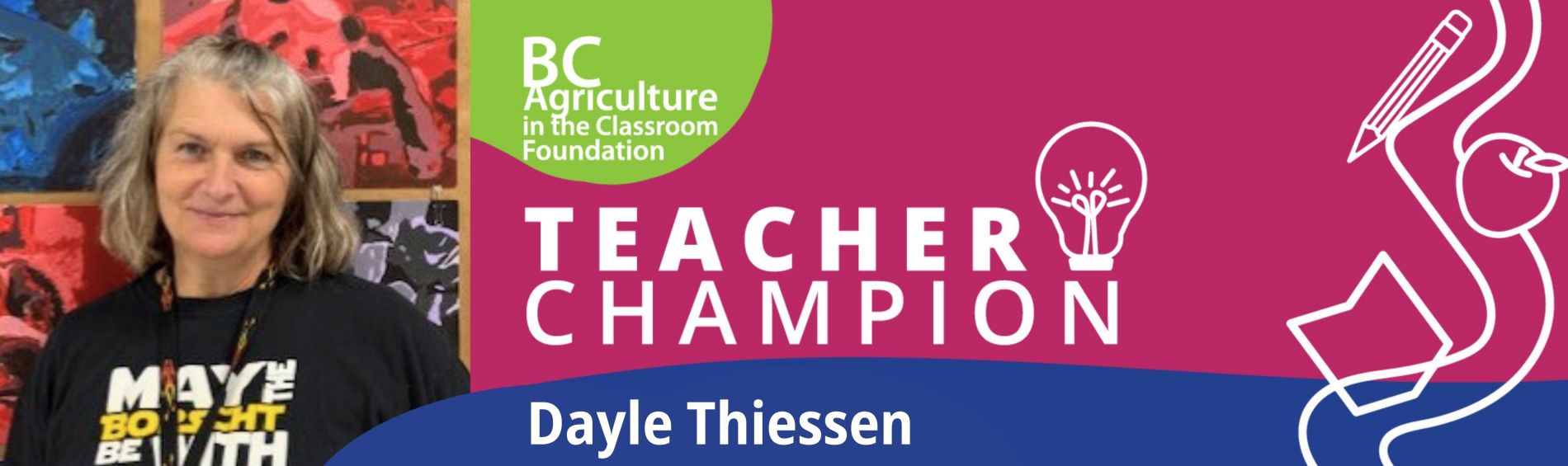
In this issue of our BCAITC Teacher Champion series, we profile BC teacher Dayle Thiessen. Discover her passion for educating students about BC agriculture, food, and the environment.
Q: What school do you teach? A: I teach at Abbotsford Traditional School in Abbotsford.
Q: What grade(s) do you teach? A: I currently teach Grades 6-12. My curriculum includes Middle School Explorations and High School Foods.
Q: How and when did you first learn about BCAITC? A: I first learned about BCAITC about seven years ago during my Master's in Home Economics at UBC. One of my electives was the 'Agriculture in the Classroom' course, also known as Summer Institute, which connected me with local farmers, food initiatives and directly introduced me to BCAITC's mission. The Spuds in Tubs program was the first program I enthusiastically signed up for, and I've been using BCAITC resources ever since.
.jpg)
Q: How long have you been teaching students about BC agriculture and food? A: I've been teaching students about BC agriculture and food for about seven years.
Q: What are the most important things that you want your students to learn about BC agriculture and food? A: I want my students to leave with practical cooking skills that will serve them for life, whether they're in university or helping out at home. Beyond that, I hope they learn how rewarding and accessible growing food can be, that it doesn't require much space, just a container, some soil, seed, water, and sunshine.
I also want to inspire them to explore the incredible variety of food grown right here in the Lower Mainland, from rice in Abbotsford to citrus in Chilliwack. We're especially fortunate at our school because many of our students come from farming families, and we sometimes receive donated produce that we use directly in class. This creates a real, tangible connection.
What really makes it all worthwhile are the hands-on experiences. Just this November, my Grade 6 Explorations class planted daffodil bulbs for the Planting a Promise project. Their curiosity, enthusiasm, and joy are contagious. That moment is exactly why I keep participating in these Agriculture in the Classroom projects year after year.
.jpg)
Q: BCAITC has over 500 free downloadable resources including lesson plans, activities, videos, recipes, and more! What is your favourite BCAITC resource and why? A: It’s hard to choose just one favourite, especially since so many of the excellent lessons come from past Agriculture in the Classroom students. The resource I return to most often is the Agriculture Fish and Food BC Map poster. I keep it displayed on our classroom bulletin board as a constant visual reference. It’s incredibly useful for showing students exactly where our food comes from, whether we're tracking how far our milk or eggs travel, or discovering that most of our berries and fruit are grown right here in the Lower Mainland. I frequently use it alongside recipes to make that farm-to-table connection immediate and real for them.
Q: What is your favourite BCAITC program and why? A:
The Spuds in Tubs program holds a special place for me. It was my very first BCAITC program, and I’ll never forget the wonder it sparked in my elementary students. Especially a Grade 3 student's simple observation: "Mrs. Thiessen, one potato makes 5 potatoes," perfectly captured the magic.
That initial wonder has stayed with me. Now, as a Foods teacher, the program’s versatility is what I value most. We use our harvest in various recipes, connecting the growing cycle directly to cooking. Last year, that connection yielded 120 potatoes right from our tubs!
.jpg)
Q: Describe an agriculture or food-based project/program you have implemented in your classroom/school recently. A: A project I'm particularly proud of is how we expanded the BC Cook-off challenge last year. My students created recipes celebrating local ingredients, resulting in two published dishes: Zucchini Lemon Muffins featuring citrus from Fraser Valley's Local Harvest, and a Desi-Style Pizza showcasing local cheese, peppers, and BC chicken.
We even extended the project into the arts. After perfecting the pizza, which blends flavors like garlic, cilantro, ginger, and hot pepper. We styled and photographed it for the REACH Gallery's 'Identity Projects' spring exhibit. Our submission, titled 'Culinary ART: Desi Style Pizza,' proudly represented our program.
Q: Do you have any advice for other educators on how to integrate agriculture and food education into their curriculum? A: Start small! Choose one simple lesson or project that fits your existing routine. Success often comes from listening to your students' interests, their natural curiosity about the world is the best guide for making these lessons resonate.
A pivotal moment for me was: while completing my studies through UBC, asking my Grade 3 class, “if humans are part of nature?” Most said no, believing we were separate. That revelation became my motivation. I realized that by integrating agriculture, through local food, gardening, and hands-on experiences, we can rebuild that essential connection.
Ultimately, these small, student-centred steps do more than teach a subject, they help build a foundation for a future grounded in food security and sustainability.
About the Teacher Champion Series: This monthly BCAITC series features BC teachers and school staff who are passionate about providing agriculture and food education to K-12 students. For more information, contact BCAITC Communications Coordinator, communications@aitc.ca.